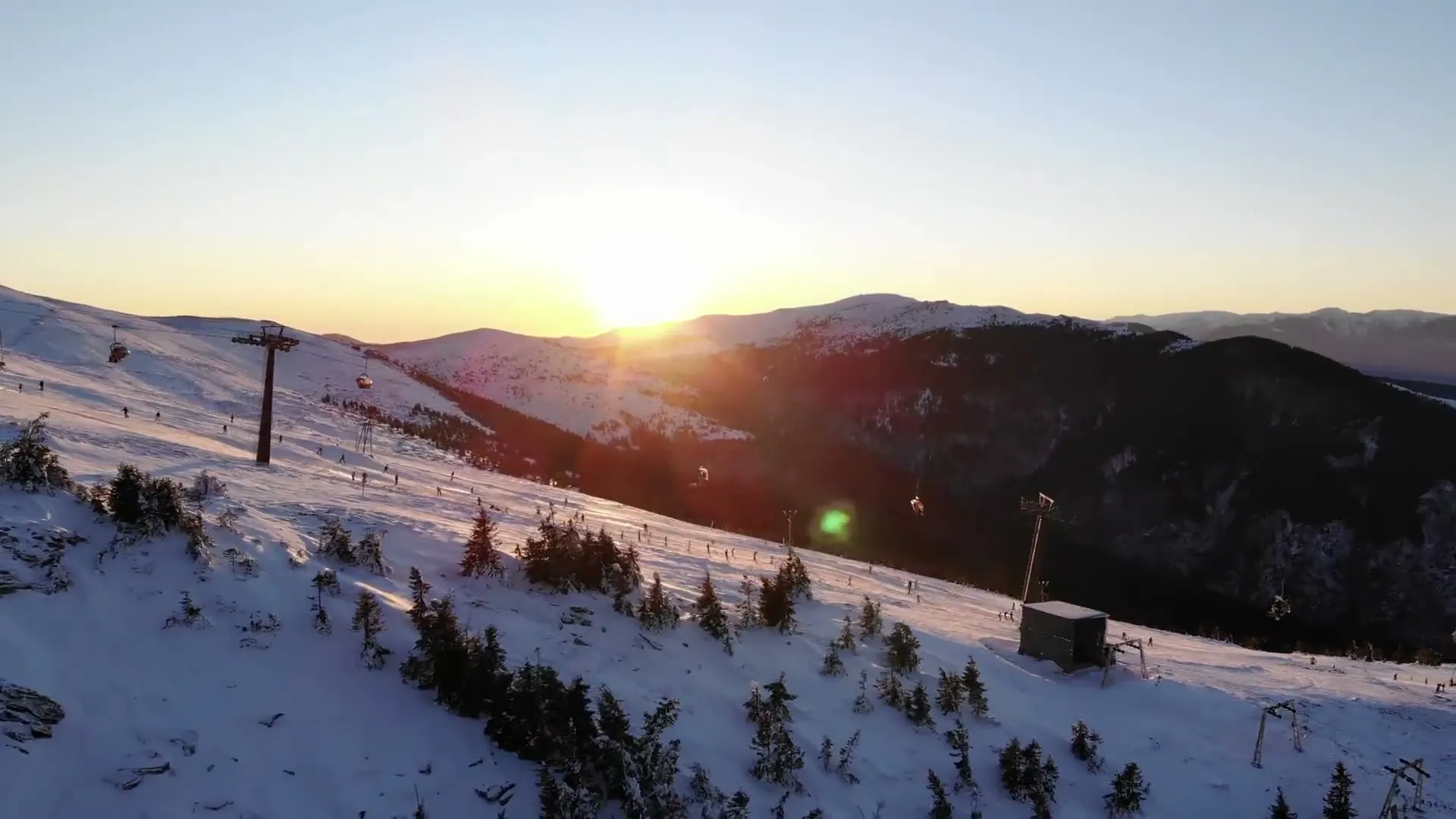
Straja means "the watch".
In Romanian, a strajă is a sentry, the one who keeps watch. The mountain wears the name well: from its ridge, at 1,868 metres, you can see the whole Jiu Valley, the Retezat and Parâng ranges and, on clear days, mountain after mountain fading away to the south.
The Vâlcan ridge has always been a crossing and a lookout between Oltenia and Transylvania. In the First World War, heavy fighting raged along these summits and more than 800 soldiers lost their lives here. The name took on an extra weight after that.
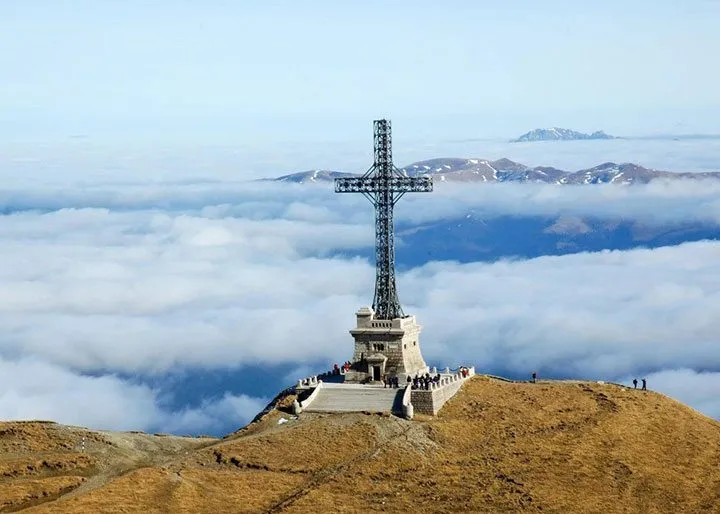
A cross you can see from the whole valley.
The story goes that one evening in 1996, at the Montana lodge, a light bulb blew and the filament left the mark of a cross on the glass. The bulb broke. A few weeks later the same thing happened with another bulb. A monk linked it to the soldiers who fell in the war and lie on the mountain without a Christian grave.
So it was decided to raise a cross in their memory. The Heroes' Cross stands over 18 metres tall with a 9-metre span, at almost 1,500 metres up. At night it's lit, and you can see it from the road that links the towns of the Jiu Valley.
Seen from town at night, the cross looks like a star that never sets.
A saint for every day.
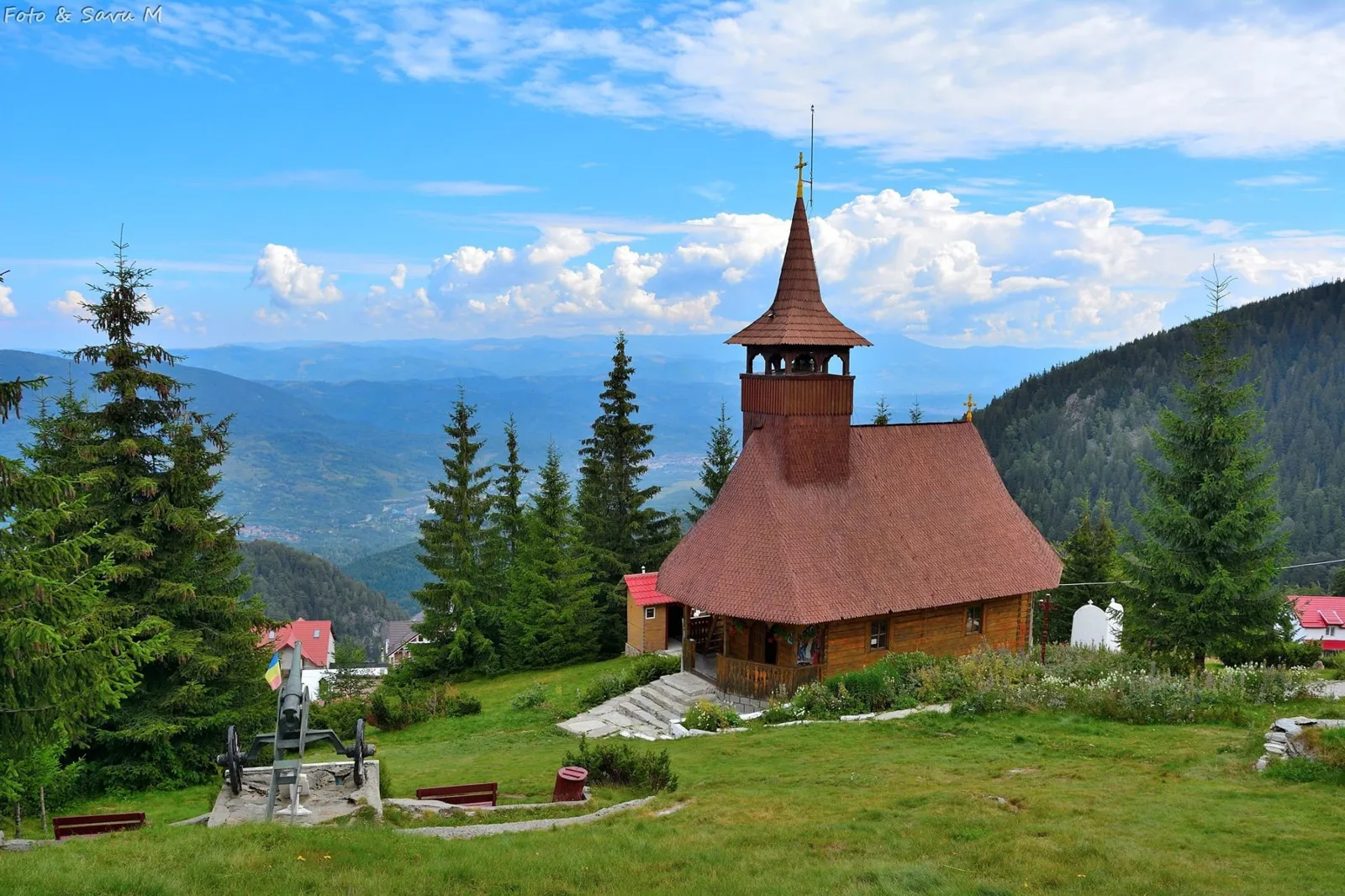
Next to the cross, Straja hermitage was built: a small wooden church dedicated to Saints Constantine and Helena. In winter, snow and blizzards buried the path to it, so a tunnel was dug to link the resort's main road with the hermitage courtyard.
The work was finished in 2006, and the painting took almost two years. The walls carry the Orthodox calendar, day by day: 365 saints, starting on 1 September, when the church year begins. The ceiling shows scenes from the Old and New Testaments. Each day, an oil lamp is moved to stand by that day's saint.
People walk in through the big wooden gate, look for their birthday, then for those of the people they love. It's probably the most peaceful place in the resort.
Ten kilometres, with the cross on their shoulders.
Every year on Good Friday, the faithful of the Jiu Valley walk from Lupeni up to Straja carrying a maple-wood cross on their shoulders. The route has 14 stations and runs for more than 10 kilometres, and it has been walked this way since 2000.
It isn't a tourist event, but it's one of the mountain's most moving traditions. If you're in the area at Orthodox Easter, it's worth seeing, respectfully.
The valley that lit up a country.
Lupeni, the town at the foot of Straja, grew up around its coal mine. Whole generations went underground with a lamp on their helmet, and Jiu Valley coal heated and lit half of Romania.
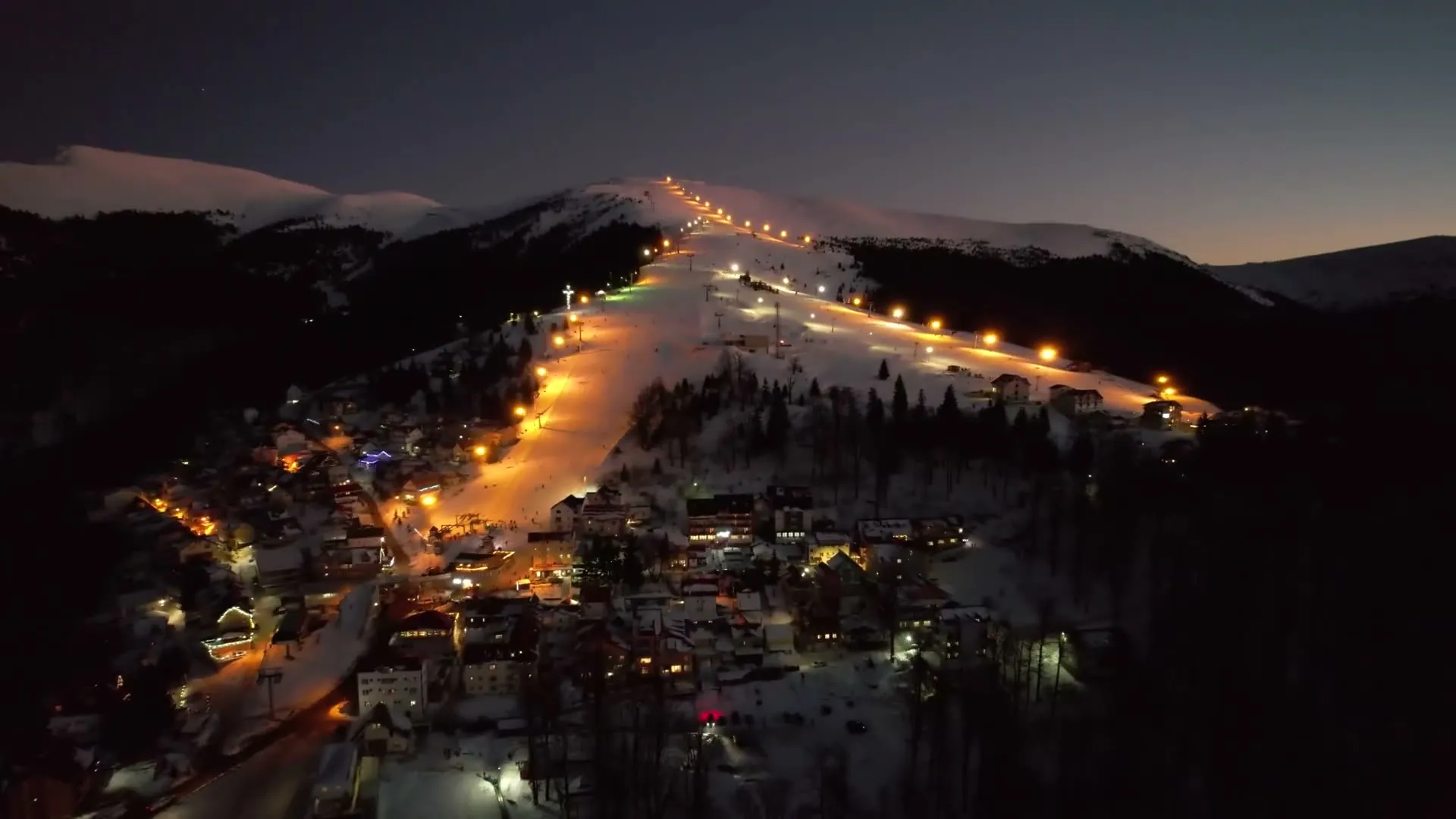
That's where our symbol comes from: the miner's lamp, the orange of its flame, the idea of keeping the light on. In the evening, when the floodlights come on over the night-skiing slopes, the mountain seems to remember it.
The people who were here first.
Before the mines, the Jiu Valley belonged to the Momârlani, its native mountain people: shepherds with houses scattered over the hills and pastures climbing right up under the ridges. When the mines came, people arrived from all over the country and the valley filled with towns.
The Momârlani kept their dress, their feast days and their way of living with the mountain. You'll hear the name at Straja too, including at one of the places to stay.
From a handful of lodges to 26 kilometres of slopes.
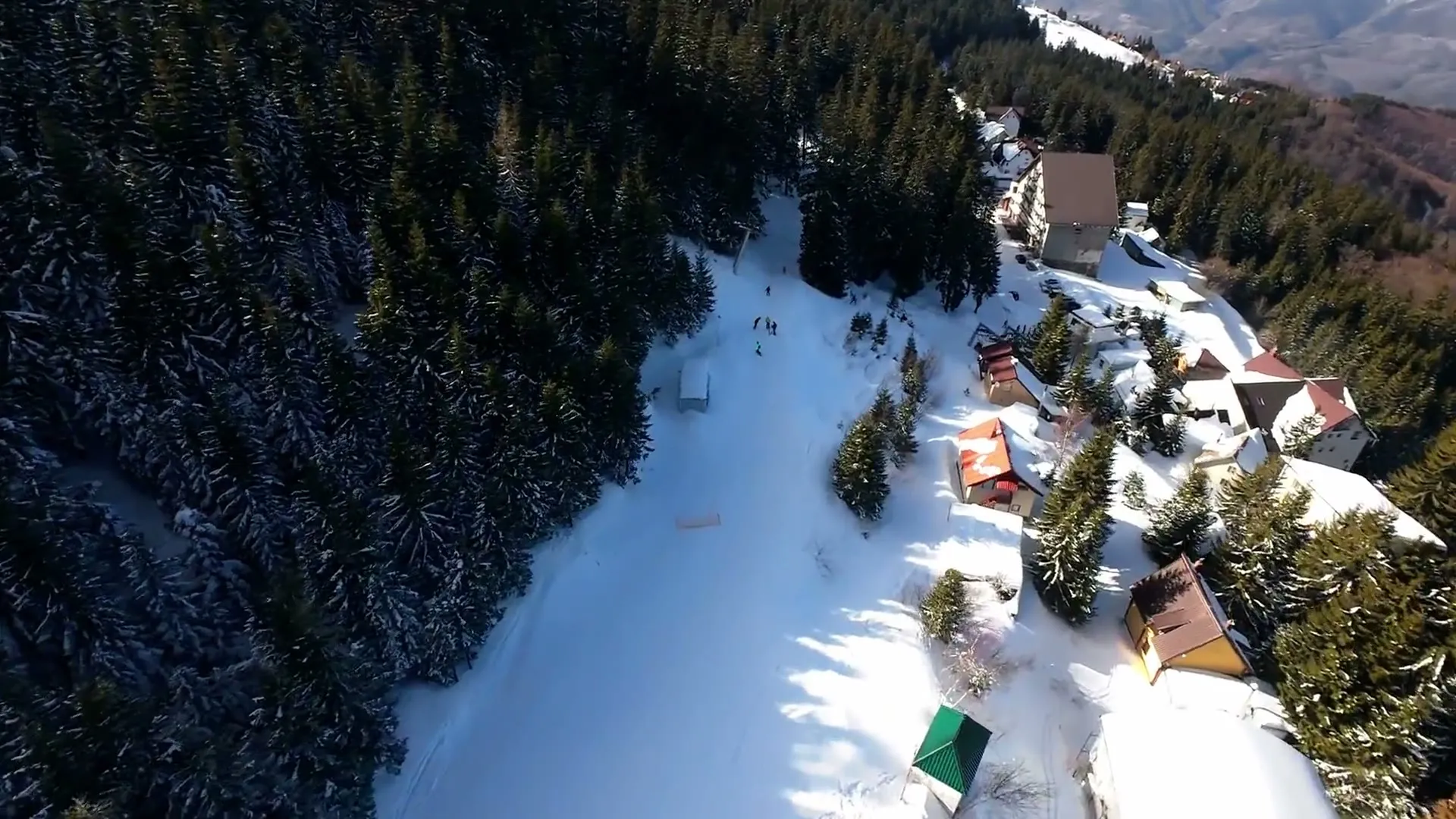
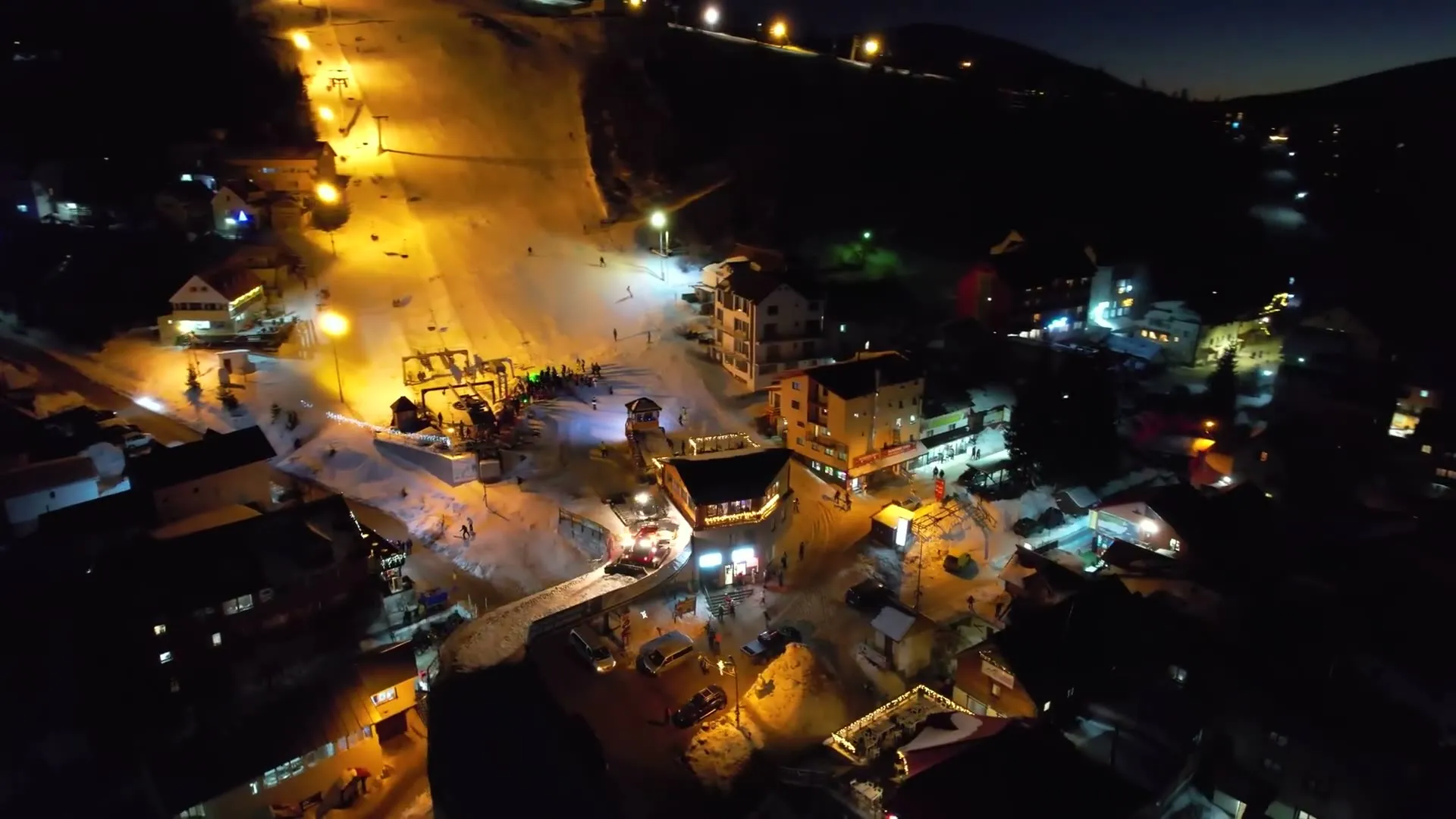
For a long time Straja was a place of mountain lodges, known mostly to locals. It became an official tourist resort in 2002. Since then it has gained chairlifts, the gondola straight up from Lupeni, snow cannons and night skiing.
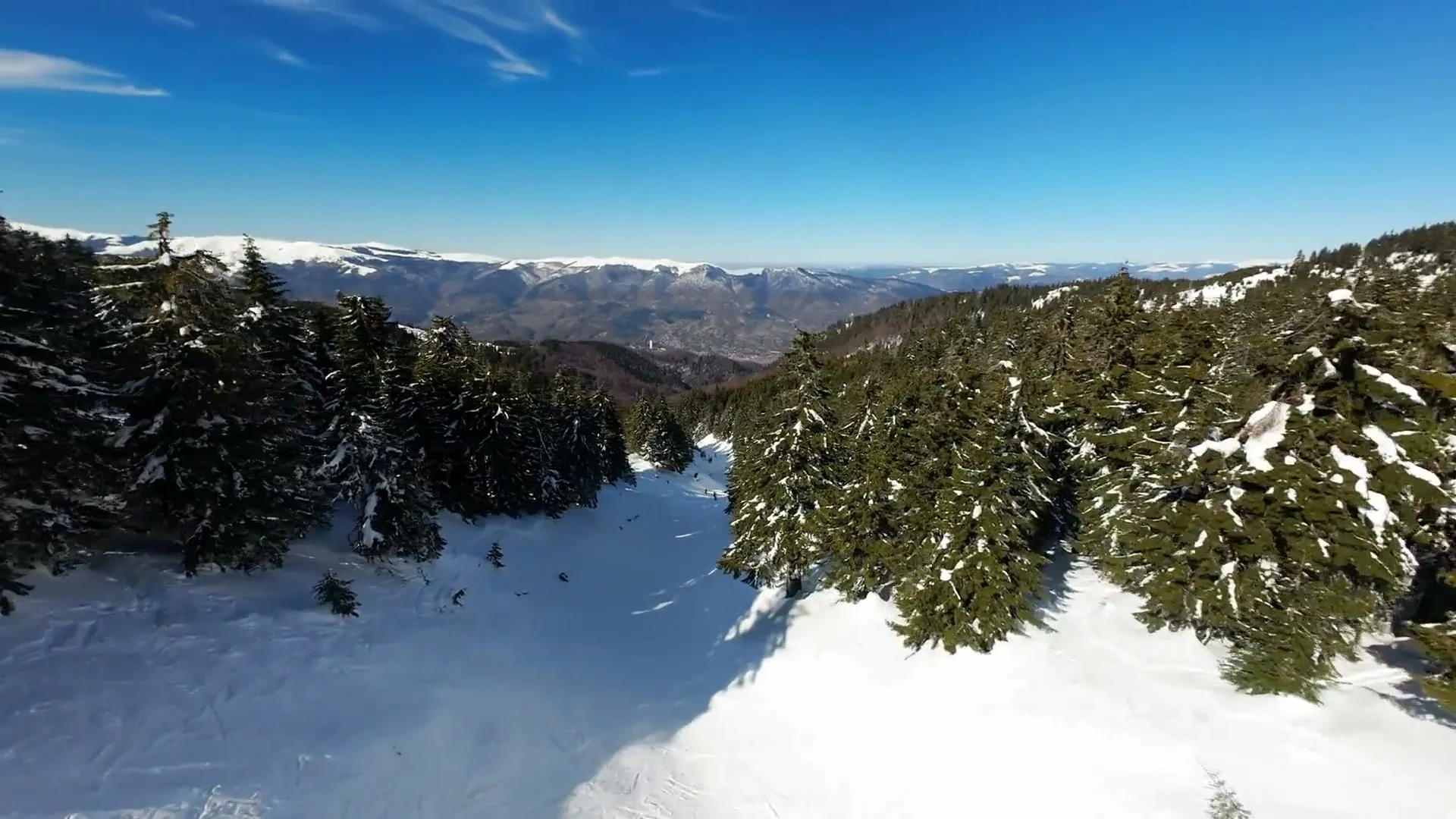
Today it has 26 kilometres of slopes, floodlit runs and the longest descent in the area, over 8 kilometres, all the way down to town. Since 2025 it has also had the Baloo Coaster, a mountain coaster that runs winter and summer.
Sources: the Pro Straja archive, Straja hermitage and the local press. Have an old photo or a story about Straja? Write to us and we'll publish it with your name.